
Scaling Auna's Design with Vitamin DS
From one pilot to Auna's design infrastructure.
Every team at Auna was building its own version of the same component, with no shared language between design and development.
I created and led Vitamin Design System from a single pilot product to a self-governed design system that today powers 22 products across 3 countries.
Year
2020-Present
Disciplines
User Interfaces
Design systems
Design tokens
Management
Governance
Design ops
Team leadership


We need to work faster to create Auna's new digital product interfaces.
Front-End Developer
It takes us a long time to review the screens, and with every new product, we have to do the same work all over again.
Product Designer
PROBLEM
No shared design & dev language
Every team at Auna was building its own version of the same component: 4 different visual styles, 3 tech stacks, 3 countries, with no shared language between design and development.
The result wasn't just visual inconsistency. It was duplicated work, slow releases, and constant rework.
DESIGN QUESTION
What's the fastest way to actually scale design and development
in the delivery of our digital products?
THE VISION
A multi-brand design system, without the friction
To be a multi-brand design system, with a Server-Driven UI approach, delivered through a user-centered experience.
Users
Designers, developers, marketing teams, and brand teams.
Problem to solve
Reduce redundancy, inconsistency, and excessive production costs in digital product development.
Product
Multi-brand, web (React/Angular), App (React Native), collaborative, and consistent.
Business goals
Reduce time to market, save production hours, and free up teams' time for new features.
OUR JOURNEY
How Vitamin was built in 4 phases

Tokens + Pilot
Started with Design Tokens, the smallest bet to prove value before building components. Applied to one pilot product to validate consistency without disrupting active teams.
Validated before scaling

First Components
A team of 5 devs, 3 designers, 1 motion designer shipped 10 components in React Web/Native, Angular, prioritized by usage frequency. Today: 56+ components.
10 → 56+ components
Scale & Governance
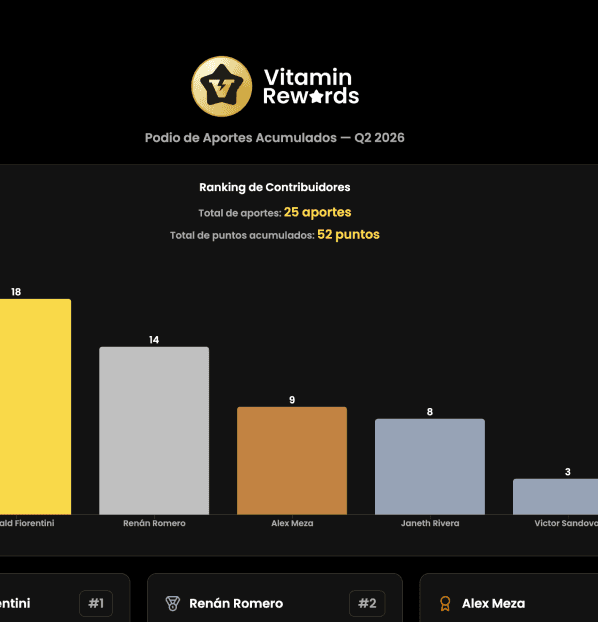
I built a distributed model: adoption levels, contribution processes, Chrome Extension for QA, Vitamin Rewards, and Vitamin Days ceremonies.
95% Adoption

Server-Driven UI
Designed and developed 22 SDUI web sections publishable from Strapi by any Product Designer (no developer needed). The biggest efficiency leap of the entire system.
5 days → 1 day to launch
How I built it?
The pilot: Validate before scaling
I started with Design Tokens, the smallest bet to prove value before building components.
I applied them to a single pilot product to validate consistency without disrupting active teams.
The pilot was Clínicas Auna 360°, Auna's first 100% digital site. If the tokens didn't work there, on one real product, there was no point asking the whole company to adopt them.

Clínicas Auna 360°: the first product built entirely with Vitamin's tokens and components.
First components: From 10 components to a library other teams started asking for
We shipped 10 components in React Web, Native, and Angular, prioritized by frequency of use.
Within a few months of launch, the library already had real traction: 10 teams using it, 23.9K insertions in a single week. It wasn't a mandate from above, teams started adopting it because it saved them work.

Early library analytics (2022): the first signal the system was actually being used.
Governance: A maturity model, not a mandate
Instead of requiring full adoption from day one, I designed a six-level ladder any team could climb at its own pace, from not using Vitamin at all to full adoption.

The six adoption levels, from 0 (not using Vitamin) to 5 (full adoption, including accessibility and motion).
The launch: From Figma to a real documentation site
With the pilot validated, we launched Vitamin's first public version: brand design tokens, 10 multi-brand core components, and a documentation site where any team could self-serve.

SHARED OWNERSHIP
The system belonged to everyone
As Vitamin matured, I moved it from a single dedicated team to a distributed model of ownership.
I designed a recognition system that turned designers and developers across 22 teams into active co-maintainers, contributing components, fixes, and documentation as part of their own work.
233%
growth in community
contributions over 3 quarters

Vitamin Rewards
A quarterly recognition program for the teams and individuals who contribute most to the system. It turned passive users into active co-maintainers.

Vitamin Days
A ceremony to share system progress, OKR results, usage analytics, and Vitamin Rewards winners.
SCALE
Everything that makes up Vitamin today
From a component library to a full ecosystem: governance tools, documentation, training, and a Server-Driven UI engine that gave development time back to the whole company.
Component Design Libraries
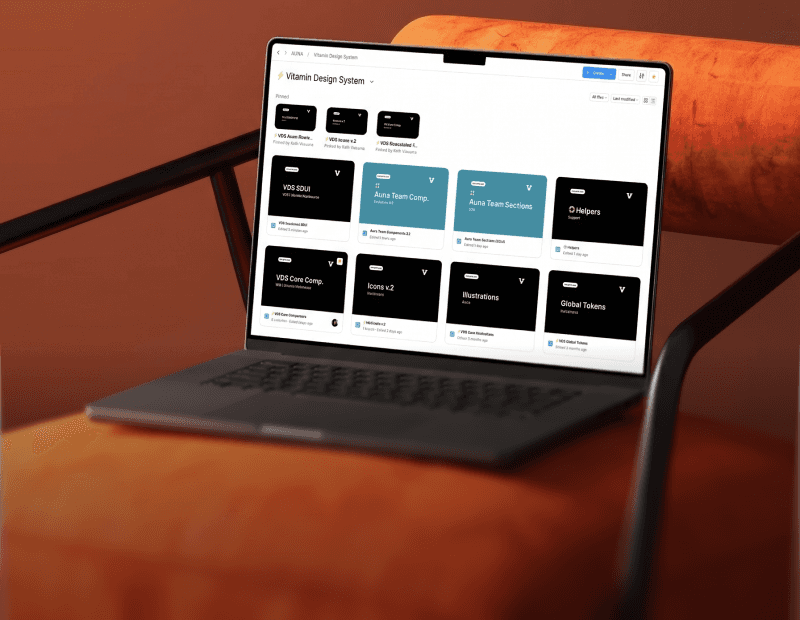
Multibrand Figma libraries, with 50+ components, 186 design tokens, 205 illustrations, and 115 custom icons.

Chrome Extension for Design QA
Lets any designer validate layout consistency and implementation directly in the browser. See extension

Team Training Program
Onboarding sessions and workshops for all design and dev contributors, covering how to use, extend, and collaborate.

Documentation Site + Storybook
A documentation website with usage guidelines and a Storybook with every component available for development.

Adoption Metrics Dashboard
A custom AI-powered dashboard tracking component usage, contribution rates, and ROI across all 22 products.

22 Server-Driven UI Sections
Sections deployable from Strapi by any Product Designer (no developer needed). Reduced launch from 5 days to 1 day.
✦ AI-powered · New
THE NEXT EVOLUTION
BIA Tool: from component to production code, in a single session
BIA Tool uses AI to generate front-end code directly from our Design System, closing the gap between design and production with no manual handoff.
30-50%
Reduction in front-end & QA development time
0
manual design-to-code handoff steps

A system measurable at every level

Hours saved
37.6k
Total design & dev hours saved
Money saved
$775k
dollars saved and overall team efficiency gain
Server-Driven UI
5d→1d
Time to publish a new web page
Teams Contribution
+233%
Contribution growth via Vitamin Rewards
Adoption
+22
Projects impacted across 3 countries


